
LIsa Black
Cape Coral, FL
Female, 49


I spent the five happiest years of my life in a morgue. As a forensic scientist in the Cleveland coroner’s office I analyzed gunshot residue on hands and clothing, hairs, fibers, paint, glass, DNA, blood and many other forms of trace evidence, as well as crime scenes. Now I'm a certified latent print examiner and CSI for a police department in Florida. I also write a series of forensic suspense novels, turning the day job into fiction. My books have been translated into six languages.
I don't follow sports so I haven't seen the story.
Share Answer: 

Usually I'm annoyed most often by people asking for things to be done immediately while ignoring a) that we are working on more cases than just theirs, b) that some processes take time, and/or c) that what their asking for isn't going to prove anything for them anyway.
As for fellow scientists, the worst offenses are a) finding typos in my reports and b) taking the last piece of cheesecake out of the communal fridge.
Share Answer: 
Usually simple black powder will show gloveprints as well as fingerprints. The bubbly sort of pattern they make will be visible.
Share Answer: 
I thought phlebotomy was the drawing of blood, so I assume its mostly used in medicine. But one person in my office is actually trained in it so she can draw our blood when we need samples for positive controls.
Share Answer: 
Starbucks Barista
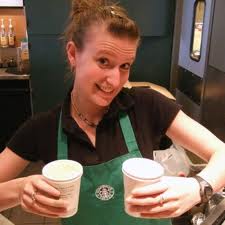 Why does Starbucks attract so many homeless people?
Court Reporter
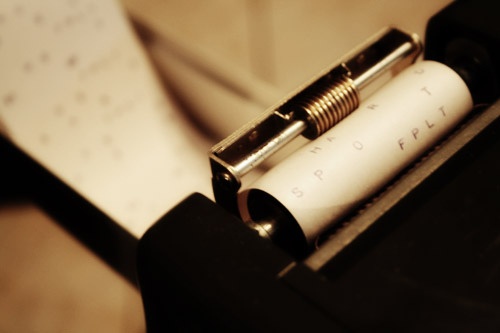 If your special keyboard lets you type 200+ words per minute, why doesn't everyone use them?
Flight Attendant
 What kinds of passengers annoy you the most?
Apparently experimentation has shown it is possible. It gets more likely the longer the gloves are worn.
Share Answer: 
That’s a good question that I’m afraid I can’t answer. I’m sure there is some way to determine the chemicals used in pepper spray. But this would be affected by a) how long does it remain on the skin before the skin absorbs it and b) most forensic chemistry labs are set up to detect illegal drugs in urine, blood or gastric contents. Identifying any kind of poison or other substance may require equipment or reference databases they don’t have.
Proving it’s the same batch of pepper spray may or may not be possible. I”m not personally involved in this kind of testing, but I can assure you it is not like television. We had a series of cases and wanted to determine the exact composition of drugs with percentages of fentanyl, heroin etc. Turned out while nearly every crime lab can determine if a drug is present, there were only one or two labs in the entire country we could find that could determine percentages, and they charged an arm and a leg.
Sorry I can’t be more help.
Share Answer: 
Titles and job requirements aren't uniform, so the only way to know is to call the crime labs in your area or whereever you might be interested in working and ask them. At the coroner's office we had to have at least a bachelor's in a natural science (this was before they had forensic science majors). At the police department where I am now, they only require a high school diploma but you get more points in the interviewing process for having a four year degree, so we all have one. You can also go on the websites for professional organizations such as the American Academy of Forensic Sciences and check out their job vacancy postings and see what the various positions require. As for determining which area, I would suggest you visit crime labs in the area to see what they do and talk to the people working there. Good luck!
Share Answer: 
-OR-
 Login with Facebook
 (max 20 characters - letters, numbers, and underscores only. Note that your username is private, and you have the option to choose an alias when asking questions or hosting a Q&A.)
(A valid e-mail address is required. Your e-mail will not be shared with anyone.)
(min 5 characters)
By checking this box, you acknowledge that you have read and agree to Jobstr.com’s Terms and Privacy Policy.
-OR-
Register with Facebook(Don't worry: you'll be able to choose an alias when asking questions or hosting a Q&A.)



 Browse Jobs
 Host a Q&A
 Search

 Submit Your Question
 Host a Q&A
 Last 7

