
MrSchroeder
Lombard, IL
Male, 33

I *was* an assistant manager for a McDonald's Franchisee in Tucson, AZ from 2007 to 2008, and was hired with the explicit intention of being management and not a standard crew member. I worked hard in learning the procedures and processes of the corporation, with a goal of a much longer career than I actually had. My every day life evolved while I was there, starting from the least desirable position to overall operations. I wrote a blog detailing my experiences as well.
This differs depending on the operation. Most franchisees and corporate offer 1 free meal per day that you work, up to anywhere from $5 to $10, though most that I know of are in the $7 range. Some franchisees do not offer this, and they're completely jerks for it. As for "eating for free while working", every manager is required to taste pretty much every product during the course of the day. You need to make sure the fries taste right at various times during your shift, taste breakfast food items to make sure they're coming out correctly, taste burger patties and completed product, test some shake of various flavors, try all the flavors of drinks from all the different dispensers in the store. It really does get old at times, because you're not enjoying it, you're testing it. It was common for me, when I was working, to get people I relied on to do this. So, if someone mentioned they're hungry or something, I'd have them place a "complimentary" order (required manager override to get it to ring up at $0.00 for inventory management purposes) and go eat it. We didn't have people eating full prepared items endlessly, but in the course of a day at least 25% of the various food items would be made completely and someone would eat them. We, for obvious reasons, didn't make things like Double Quarter Pounders, and it's unlikely the fancy Angus burgers (which we did not have when I worked there) get made and tested, but it's likely about 4 times a day someone's trying the Angus patties for quality.
Share Answer: 

There was this girl named Gabriella - maybe 19 years old - who worked in the kitchen. She spoke very little English, was constantly arguing with people in the kitchen, refused to follow procedures and policies, and liked to simply stare with an angry look when she was asked to do something that was more than putting sandwiches together. I observed all this in the first two shifts working with her, and it was more apparent a few weeks in. So, she was in fact my first "target" for growth. I spent a lot of time trying to demonstrate to her the proper procedures, and in fact, since I was so new, I made her train me some of the things that I didn't know (or what I wanted her to demonstrate correctly). Every time she did something well I praised her for it. A few shifts into this, I started taking it more proactively. I'd show her things that I knew she was uncomfortable and possibly even angry about doing - like stocking small freezers correctly, labeling things with times, making sure that cheese is "tempering" and labeled properly, mopping, preparing sanitized water, etc. I'd follow basic "coaching" procedures on all of these - explain the right way, demonstrate the right way, provide praise when they do it right. After a while, it sank in that all of these things were easy, and earned her praise from managers all the time. Silly thing that it is, praise from someone (even someone you may not like) is valuable and potent. It's even more important when it comes from someone you do know and love. We were short handed one day, and none of our staff could cover. So we got a staff member, Luna, from another store, and she was essentially this girl Gabriella +5 years. As soon as I explained where she'd be working and she got next to Gabriella, I was like "Wow you two could be sisters! You look so much alike!" and they both giggled. They were sisters. Well, it turns out Luna was in fact the rock star super-Ace in her store and throughout the day Luna and Gabriella were praising the hell out of each other, and Luna seemed genuinely surprised that her sister could not only keep up with her in the workflow, but was able to hold on to every policy and procedure in the heat of a lunch rush. In the end, Gabriella started along a path to management and was transferred to another store, as ours already had 3 new-ish swing managers and 2 management candidates. The whole time between meeting her with her horrible attitude and her moving on to being a management candidate in another store would not have happened if I did not coach her using tried and true McDonald's coaching procedures. It took me having a good attitude to accomplish this as well. Keep in mind however, there are total jerks and a-holes who have no intention of doing well, ever, no matte what you do. Those people get fired and wonder why the world hates them so much.
Share Answer: 
I think on the Store manager/Director/Owner Operator level this went on, but among crew no way. Like I said in another question - we knew where we were working.
Share Answer: 
First - not only have they considered it, they’ve been selling them for at least 2 years in stores that have a McCafe. http://www.mcdonalds.com/us/en/promotions/Smoothies.html Secondly, that statistic is, in my experience, hugely inaccurate. As I’ve explained in the question about why McDonald’s serves breakfast/lunch in separated segments, most McDonald’s restaurants are focused solely on breakfast food items during breakfast time. More importantly, most McDonald’s stores don’t have their ice cream or shakes machine running until about 9 or 10am (depending on the market, traffic and other factors). The prime reason for this is that the person who is generally assigned the task of "building" the machine - that is, takes it from its dismantled, clean state and puts it into operational condition - has other tasks before then, like recycling oil. This role is generally filled by a person with the title of "maintenance". They have a regular schedule of tasks, from cleaning the outside of the store (including pressure washing sidewalks, watering/maintaining flower beds, scrubbing and rinsing out the trash corral area), to taking out last night’s trash (remember, you never open the back doors after dark!), cleaning out the lobby (which also includes scrubbing out trash corrals and trash cans and cleaning all of the Play Place area), and making sure the bathrooms have a deep sanitizing clean (the bathrooms are touched up as needed throughout the day, and sanitized again if needed later). So, as I said, this person has a tight schedule with many tasks. It’s usually about 9 or 10am when they get to putting the shake machine into operational condition, which takes from 5 to 20 minutes depending on the quantity and types of machines. Then, the mix is poured in which takes about 25 minutes to become servable, making shakes and ice cream ready just a bit before 10 or 10:30am.
Share Answer: 
Employment Lawyer
 Can I be sued for asking a co-worker on a date?
Toll Collector
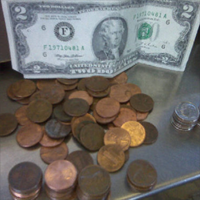 What's the rudest thing a driver ever said to you?
Bodybuilder
 What kind of “primping” is required for competitions?
This is entirely dependent upon the franchisee and the market. In general, standard crew members do start off right at or barely above the minimum wage. Managers have several pay brackets and most of it is based off experience. You might have two people with the exact same job title and responsibilities working in the same store with a $2/hr difference. Depending on the market the store is in, and how many qualified applicants there are, pay might be as much as $9 for crew, or it might be bare minimum wage. Store managers might make anywhere from $27k to $75k a year depending on the market, performance, and many other factors. As far as raises, there were 6 months reviews for crew and lower tier managers, annually for store level managers. At these reviews someone would receive anywhere from nothing to 25 cents an hour pay increase. Usually it was about 5 to 10 cents. For assistant and store managers, the range was nothing to $1 per hour, with 50 cents being the norm. Keep in mind, assistant and store managers also got bonused (as explained in a previous post).
Share Answer: 
Very rarely will a McDonald's dining room be full. The longer people stay, the more often they'll come. If you make it easy and convenient for a customer to come hang out for an hour and a half, the more likely they'll repeatedly come in. Even if they just order a soda or a coffee - the profit level of those drinks is so high that it takes 10 refills before the McDonald's loses money. Also, if you come more often, you spend more money. It's pretty simple really.
Share Answer: 
Well first and foremost, a store generally wouldn't be "way overstocked" - it likely wouldn't even be a little bit overstocked. Every McDonald's is a business and as such doesn't just pile up their stockrooms, coolers and freezers with more product than they need (at least not enough to benefit a shelter or other organization) unless in a gross case of incompetence.
Directly to the point of the question, most of the food that was wasted (the term for throwing out food that doesn't meet quality or safety expectations) was food that was already prepared and exceeded it's hold time - and at that point it can't be given away. Because all of the products that make McDonald's food have a long shelf life, and the few products that do have a high rate of spoilage (such as lettuce and milk) are used in quantity, there's little actual stock spoilage or food going bad. Also, once food is spoiled, it's spoiled. I'm sure you can agree, it would be far worse to give a shelter or some organization food that has gone bad than to give them nothing.
The vast majority of stores actually run understocked in an effort to reduce costs. However, this backfires seriously because it is much more expensive to get stock that a store is short of (by immediately delivery or borrowing from another store) - not only realistically (it costs more to have immediate delivery from a warehouse or the costs associated with driving to another store and borrowing product) but also from a paperwork standpoint. Also, product requests/shortages affect a management team's performance assessment as these inventory inconsistencies are tracked on a daily basis. Inventory management being the second most manageable aspect of a McDonald's restaurant (labor being the first), this is rightly a big deal.
In the rare case that a product goes bad inside of it's shelf-life, in most cases it gets returned to the distribution warehouse for a refund/replacement. I think this happened with maybe 1 product box every 10 deliveries or so, a really great record considering most deliveries were on the order of 2,500 individual boxes.
Managing inventory well is one of the most costly aspects of managing a McDonald's and one of the most difficult. The first store manager I briefly trained under (before moving to the store I worked at primarily), never walked her stock rooms, coolers and freezers before making orders - she relied on her managers to accurately count inventory for reporting purposes. These staff members followed her example and barely put any effort into their work, meaning her inventory reporting was never accurate (something I encountered nearly instantly and tried hard to resolve in the short time I was there, ineffectively). This manager never reviewed her inventory reporting prior to making orders, but only used that reporting to meet the requirement that it be done. She also could never comprehend why she was always running out of stock and had high spoilage. So basically, she had no idea what she had on hand when she went about the task of ordering more stock, and even if she had used the tools at her disposal, they would have done her more harm than good through their inaccuracy.
The second store manager I worked with had more experience (a decade with McDonald's, as I recall him mentioning repeatedly) and thought he could "eyeball" product stock and made orders based off of usage and studied the inventory reporting but also never walked the stock room, walk-in or cooler. He delegated all inventory counts to a capable manager (usually me) and used that inventory reporting to determine what he would order.
I mentioned elsewhere that my first year, the store I was in lost $5,000 for the year. In the course of one month, strictly controlling inventory and actively reviewing reports *and* the physical stock, I was able to reduce our inventory overage by $3,500 and reduce stock requests (borrowed/immediate shipped) by a further $1,500 - negating for that loss from the year before. The trick was to make sure there was not a surfeit of stock that had very long shelf life and increase the stock of short shelf-life items enough to cover but not enough to waste. It just so happens that the products with the longest shelf-lives (generally proteins) are the most costly - so cutting the number of them by a small amount has a great effect. The shortest shelf-life items (like lettuce, tomato and milk) also had a lower cost. 5% fewer protein items in stock (let's say $1000) and 10% more vegetable/perishables stock (call it $250) had a net positive effect on the inventory.
Share Answer: 
-OR-
 Login with Facebook
 (max 20 characters - letters, numbers, and underscores only. Note that your username is private, and you have the option to choose an alias when asking questions or hosting a Q&A.)
(A valid e-mail address is required. Your e-mail will not be shared with anyone.)
(min 5 characters)
By checking this box, you acknowledge that you have read and agree to Jobstr.com’s Terms and Privacy Policy.
-OR-
Register with Facebook(Don't worry: you'll be able to choose an alias when asking questions or hosting a Q&A.)



 Browse Jobs
 Host a Q&A
 Search

 Submit Your Question
 Host a Q&A
 Last 7

